01
Breath awareness
Sit comfortably, feel the breath at the nostrils or belly, and return attention each time it wanders. The returning is the practice — not a failure of it. Best for people who want something plain and portable.
Philosophy
The physical class is one limb of a much larger framework. This is that framework, translated out of Sanskrit and into something you can use on a Tuesday.
Patanjali's Yoga Sutras describe eight limbs — ashtanga, literally eight limbs, which is why the athletic style borrowed the name. Notice the order: ethics come first, posture third, meditation seventh and eighth. The tradition assumes that a mind cannot settle while your conduct is chaotic.
Modern classes compress all eight into an hour of movement and a two-minute savasana. That is a reasonable compromise for busy people, but it is worth knowing what was compressed. The rest of this page restores some of it.
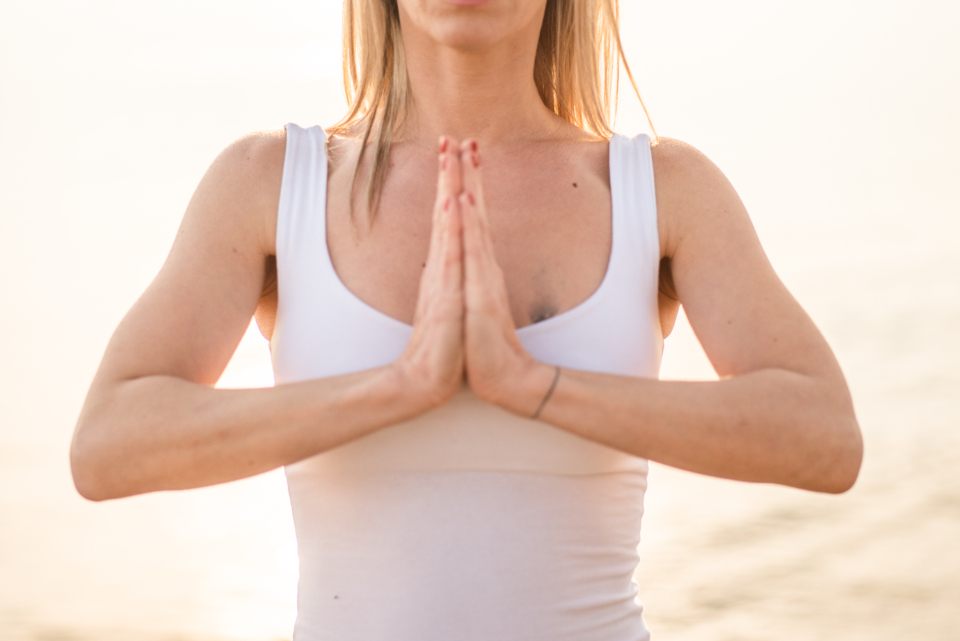
Anjali mudra — respect offered before effort
Ashtanga
Read them as a sequence of increasing subtlety, not a checklist to complete.
Five ethical commitments that govern how you treat others: non-harming, truthfulness, non-stealing, moderation, and non-possessiveness. In practice, yama is the recognition that your behaviour is part of your practice.
Five commitments toward yourself: cleanliness, contentment, discipline, self-study, and surrender to something larger. The interesting pair is contentment and discipline — held together, they prevent both complacency and self-punishment.
A seat that is steady and comfortable. That is the classical requirement. Everything else — alignment, strength, depth — serves the ability to remain attentive without fidgeting.
Deliberate breathing practices that lengthen, retain or balance the breath. Powerful and easily overdone; the traditional texts recommend a teacher and moderation.
Turning attention away from external stimulation and toward the inner field. Practically: closing your eyes, putting the phone in another room, letting the room go quiet.
Holding attention on a single object: the breath, a sound, a point. This is the repetition that most people call "trying to meditate", and it is genuinely effortful.
When concentration becomes continuous, effort drops away and attention rests on the object without strain. You cannot force this stage; you can only keep creating the conditions.
The boundary between observer and observed softens. Traditions describe this differently and disagree about how it is reached. Treat it as orientation, not a goal to achieve this month.
Ahimsa (non-harming) is the foundation, and it applies to your own body first — which is why forcing a pose contradicts the first limb. Satya (truthfulness) includes not exaggerating what your practice is doing for you. Asteya (non-stealing) covers time and credit as much as objects. Brahmacharya, often translated as moderation, is about not squandering energy. Aparigraha (non-possessiveness) asks you to hold your achievements lightly.
Saucha (cleanliness) is both literal and mental. Santosha (contentment) is the capacity to be with what is, without needing the next thing. Tapas (discipline) is the heat of sustained effort. Svadhyaya (self-study) means reading yourself as carefully as you read a text. Ishvara pranidhana (surrender) is the willingness to release the outcome.
If that sounds like a description of a well-adjusted adult rather than a mystical achievement, you have understood it correctly. The philosophy is practical by design.
Pranayama is the most portable part of yoga: no mat required, no changing room. Start with the first two, and only add the others once those feel natural.
Lie down with one hand on the belly and one on the chest. Breathe so the lower hand rises first. Five minutes. This is the foundation for everything else.
Inhale through the nose for four counts, exhale for six to eight. Ten rounds. The long exhale stimulates the parasympathetic side of the nervous system — the most reliable calming tool in the practice.
Close the right nostril, inhale left; close left, exhale right; inhale right, exhale left. That is one round. Five to ten rounds, seated. Balancing and quietly focusing.
A slight narrowing at the back of the throat creates an audible, soft sound. Used through a Vinyasa class to keep the breath steady and the rhythm even. Never force the sound.
Inhale four, hold four, exhale four, hold four. Useful before something stressful. Skip the holds if you are pregnant, have uncontrolled blood pressure, or feel light-headed.
Caution. Breath retention and rapid breathing are not for everyone. Avoid them during pregnancy, with cardiovascular or respiratory conditions, epilepsy, glaucoma, or a history of panic attacks — and never practise them while driving or in water.
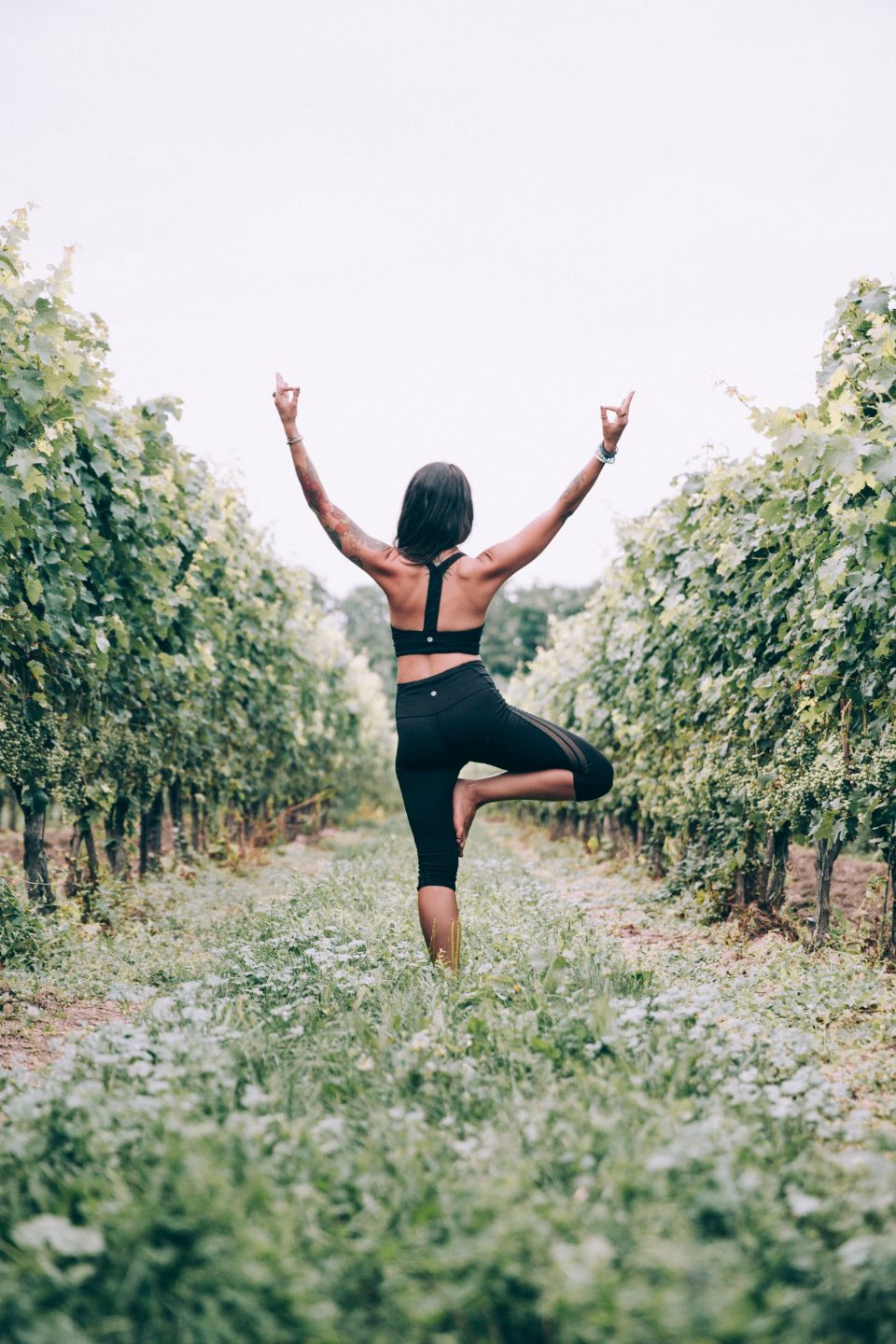
Steadiness is trained, not summoned
Meditation
There is no single correct meditation. Choose one that does not make you dread the cushion.
01
Sit comfortably, feel the breath at the nostrils or belly, and return attention each time it wanders. The returning is the practice — not a failure of it. Best for people who want something plain and portable.
02
Move attention slowly from feet to head, noticing sensation without changing it. Lying down is fine, though you may fall asleep. Best for tense or restless people, and for pain that reacts to attention.
03
Repeat a word, phrase or simple sound silently, letting it occupy the foreground. Some people find this far easier than silence. Best for busy minds that need something to hold.
Sit on a cushion or a chair with your feet flat. Set a timer so you are not watching the clock. Choose one object — breath, body, sound. When attention leaves, come back. That is the entire instruction.
Expect restlessness. Expect to plan a shopping list. Expect the five minutes to feel long for the first week. None of that indicates you are bad at it. Over time, most people notice the gap between stimulus and reaction widening slightly — which is the practical payoff.
The point was never to sit still for an hour. It is to notice what you are doing while you are doing it: the tension in your jaw at the laptop, the speed at which you eat, the moment you reach for the phone. Yoga gives you a trained attention; daily life gives you somewhere to spend it.
The philosophical frame is developed further in the history of yoga, and the physical counterpart is in the asana guide. If you would like to learn pranayama with supervision rather than from a page, come to a class.
Continue